


Which matcha grade suits your taste and routine?
Which matcha grade is best? Start with how you plan to drink it: plain, in a latte or in recipes. A simple guide to grades, taste and value…
Country, language & currency
The Tea Journal · Matcha · Teaware
By the Tealyra Tea Team · · 4 min read

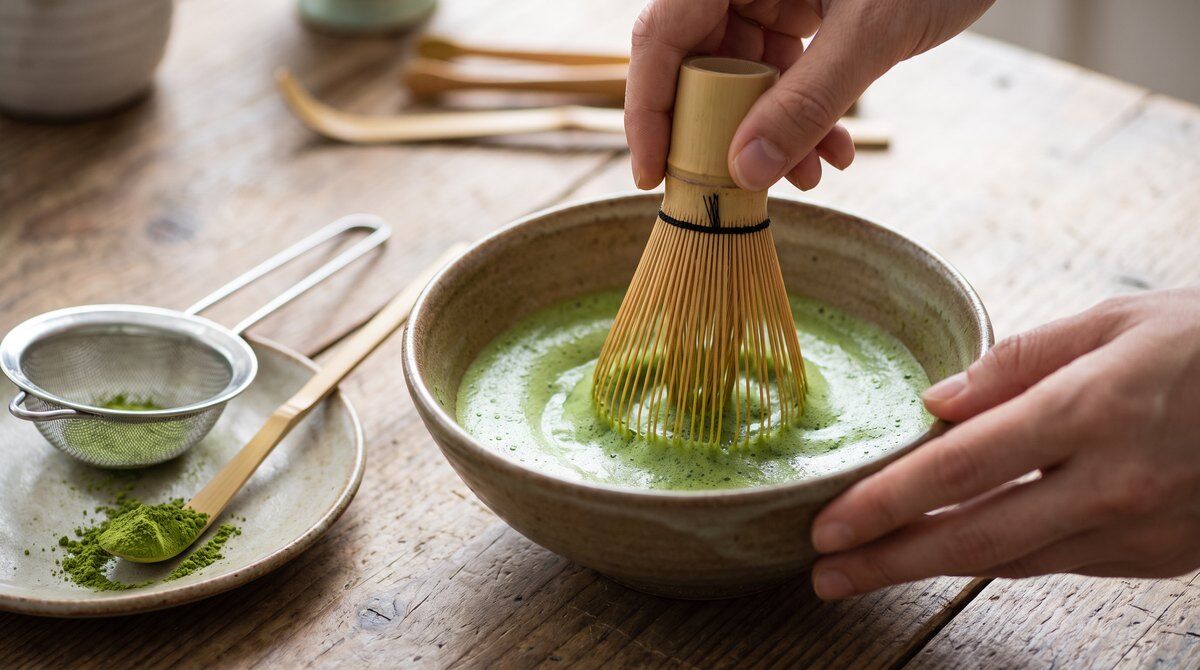
In short: for everyday matcha, choose a 100-prong bamboo whisk (chasen). It froths quickly, works for both thin usucha and lattes, and is easy to clean. Soak it in warm water for a minute before use, whisk in a fast "M" or "W" motion, rinse it in plain water afterwards and let it dry upright on a whisk holder.
A good whisk is the difference between a smooth, frothy bowl and a lumpy one. It is also the most delicate tool in your matcha kit. Here is how to pick the right one and keep it in shape through many months of daily use.
A chasen is a whisk carved from a single piece of bamboo. The top is split into many fine tines (prongs), which are thinned by hand and curled inward. When you whisk, the tines break up clumps of powder and fold air into the tea, giving matcha its creamy foam.
Metal whisks and electric frothers can mix matcha, but they do not create the same fine, even foam. Bamboo is also gentle on ceramic bowls.
Prong count is the number you will see most often. More prongs means finer tines and more air whisked into the tea.
| Prongs | Best for | Feel |
|---|---|---|
| 70 to 80 | Koicha (thick matcha), beginners on a budget | Sturdier, fewer bubbles |
| 100 | Everyday usucha (thin matcha) and lattes | Quick, fine foam, the all-rounder |
| 120 and more | Very fine foam, experienced whiskers | Softer, more delicate tines |
For most people at home, 100 prongs is the sweet spot. Our Matcha Whisk is a traditional 100-prong chasen, the size we reach for every morning.
Avoid pressing the whisk into the bowl or stirring in circles; that bends the tines and gives flat, bubbly tea. Good matcha makes whisking easier too: try Everyday Uji Matcha for lattes or browse our matcha powder range for ceremonial grades.
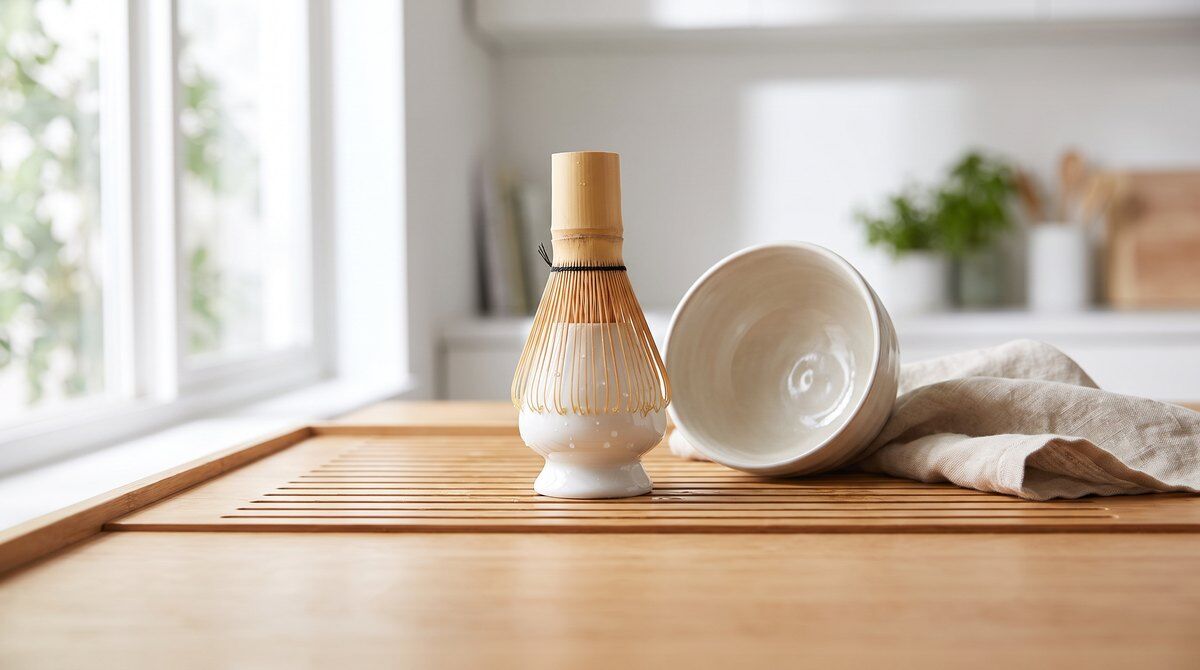
Most whisks are ruined by how they are dried, not by how they are used.
A Matcha Whisk Holder costs little and can double the life of your whisk. If you live in a damp flat or a hard water area, let the whisk dry fully in a well-ventilated spot rather than on a windowsill above the sink.
With daily use and good care, a bamboo chasen usually lasts several months to a year. Signs it is time for a new one:
A broken tine or two is normal and will not spoil your matcha. Snip any loose splinters off neatly so they do not end up in the bowl.
You can mix matcha with a spoon, a shaker or an electric frother, but a bamboo whisk gives the smoothest texture and the finest foam. For lattes, a frother is fine; for matcha with water, a chasen is worth it.
Soaking in warm water softens the dry bamboo so the tines bend rather than break. It also helps the whisk move through the tea more smoothly. Thirty seconds to a minute is enough.
No. Rinse it in warm water only. Soap gets into the bamboo, can leave a taste in your tea and dries the fibres out over time.
Dry it upright on a whisk holder, tines down, in an airy spot, and only store it once it is completely dry. Never put it back into its plastic case while damp.
Which matcha grade is best? Start with how you plan to drink it: plain, in a latte or in recipes. A simple guide to grades, taste and value…

How to tell if matcha powder is high quality: judge the color, aroma, texture, taste and ingredient list together, not one label or a…

How to make strawberry matcha at home: a strawberry base, whisked matcha and milk layered over ice. Easy steps, plus tips to adjust…