


Decaf Tea for the Evening: Decaf Green, Rooibos and Herbal
Which tea to drink after 6pm: decaf green and black, rooibos and herbal infusions compared for taste and caffeine, with brewing times and…
Country, language & currency
or
The Tea Journal · Brewing Guides · Green Tea
By the Tealyra Tea Team · · 6 min read

In short: Sencha is Japan's most popular green tea. The fresh leaves are steamed within hours of picking, then rolled into slim, dark-green needles and dried. The cup is bright yellow-green, grassy and sweet with a savory, umami depth and a clean, slightly brisk finish. Brew 2 teaspoons (4-5 g) per 8 oz (240 ml) at 160-175°F (70-80°C) for 60-90 seconds, and re-steep the same leaves two or three times.
Roughly six out of every ten cups of tea drunk in Japan are sencha: the tea served at home, in offices and with lunch. This guide covers how it is made, how it tastes, the terms you will see on a label, and how to brew it well.
All green tea is heated soon after harvest to stop the leaves from oxidizing. Chinese green teas such as Long Jing (Dragon Well) are pan-fired in a hot wok, which gives them a toasty, chestnut character. Sencha is steamed instead, for anywhere between 20 seconds and two minutes. Steam keeps the leaf vivid green and locks in the fresh, vegetal flavor Japanese teas are known for.
After steaming, the leaves go through several rounds of rolling and drying that press them into tight, flat needles. This rolling breaks the leaf structure slightly, which is why sencha gives up its flavor fast and why the brewing times below are so short.
Sencha is grown in full sun, unlike shaded teas such as gyokuro and matcha. Sunlight builds more catechins in the leaf, so sencha has more of the brisk, slightly astringent edge that balances its sweetness. If you enjoy matcha but want something lighter to drink all day, sencha is the natural next step.
A good sencha is a balance of three things:
The aroma is green and marine, sometimes with a hint of seaweed or fresh pine. Over-brewed sencha turns bitter and drying, so if your cup tastes harsh the fix is almost always cooler water or a shorter steep, not a different tea.
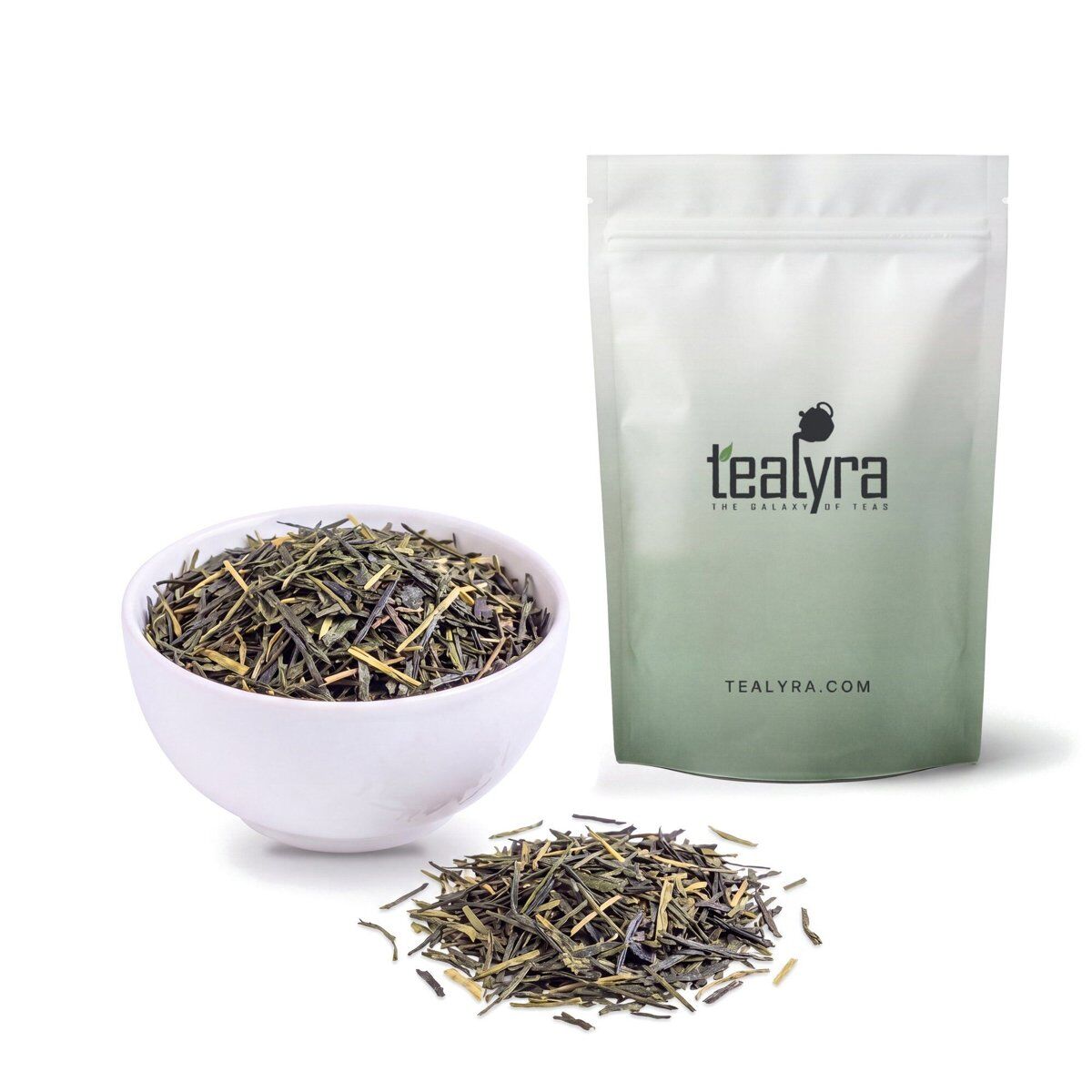
Japanese sencha is sold by harvest and by steaming style rather than by a single grading system. These are the terms worth knowing.
| Term | What it means | In the cup |
|---|---|---|
| Shincha | The first picking of the year, April to May, sold fresh for a few months | Brightest, sweetest, most aromatic |
| Ichibancha (first flush) | Spring harvest; the best sencha comes from this picking | High umami, soft sweetness, fine needles |
| Nibancha (second flush) | Summer harvest, June to July | More astringent, simpler, good value for everyday brewing |
| Asamushi | Light steaming, 20-40 seconds | Clear yellow liquor, delicate, more aroma and briskness |
| Chumushi | Medium steaming, about 40-60 seconds | Balanced; the "standard" sencha profile |
| Fukamushi | Deep steaming, 60-120 seconds | Cloudy, rich green liquor, smooth and full with very little astringency |
Deep-steamed (fukamushi) sencha has become hugely popular in Japan because it is forgiving and bold. The long steaming breaks the leaf into smaller pieces, so the dry tea looks more like fine flakes than whole needles, and it brews a thick, opaque green cup. Our Fukamushi Sencha Kakegawa is a classic example from Shizuoka's Kakegawa district.
Shizuoka, on the Pacific coast south of Mount Fuji, grows about 40 percent of Japan's tea and is the home of deep-steamed sencha. Kagoshima, in the far south of Kyushu, is the second-largest region and the first to harvest each spring thanks to its warm climate; teas from the Chiran area are known for a clean, rich sweetness. Uji, near Kyoto, is the oldest tea region of all and produces refined, elegant senchas alongside its famous matcha and gyokuro.
The cultivar matters too. Yabukita covers most of Japan's tea fields and gives the classic balanced profile; Saemidori and Yutakamidori lean sweeter and deeper green.
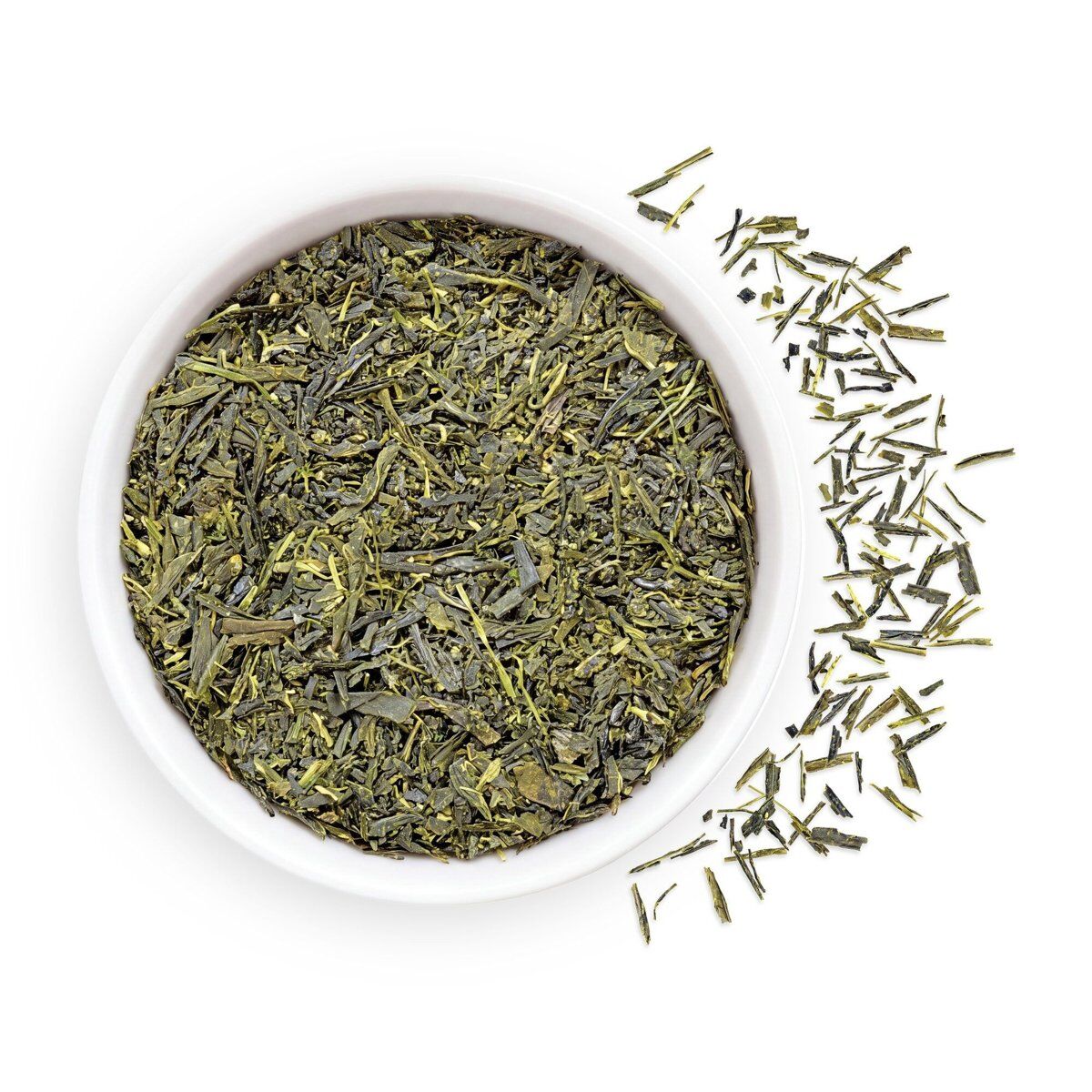
Sencha rewards care but does not need special equipment. A small teapot with a built-in mesh strainer (a Japanese kyusu) is ideal because the fine leaves need room to open and a strainer that catches them. Any teapot or infuser basket works.
If you only remember one rule, remember this: cooler water and a shorter time than you would use for black tea. Water straight off the boil is the single most common reason people decide they "don't like green tea."
Put 2 tablespoons (8-10 g) of leaf in a 1-quart (1 L) pitcher of cold water, refrigerate for 3-6 hours and strain. Cold water pulls out sweetness and umami but almost none of the astringency, so the result is smooth and refreshing with no sugar needed. Deep-steamed sencha cold-brews especially well.
You can browse the full range on our Japanese green tea page, or compare sencha with Chinese styles across all green tea. If you like sencha with a toasty twist, genmaicha blends it with roasted brown rice.
Yes. A typical 8 oz (240 ml) cup of sencha contains roughly 20-35 mg of caffeine, about a third of a cup of coffee. First-flush and deep-steamed senchas sit at the higher end, and later steeps carry less.
Both are Japanese green teas, but matcha is grown in shade and ground into a powder that you whisk and drink whole, while sencha is grown in full sun and steeped as loose leaves. Sencha is lighter, brisker and far easier to drink several cups of in a day.
Almost always because the water was too hot or the steep was too long. Let boiled water cool to 160-175°F (70-80°C), steep for 60-90 seconds and pour the pot out completely between steeps.
Two or three times is normal. The second steep is often the best, with the leaves fully open and the flavor at its roundest.
Which tea to drink after 6pm: decaf green and black, rooibos and herbal infusions compared for taste and caffeine, with brewing times and…

Dragon Well (Long Jing) tea explained: where it grows, why the leaves are flat, how it tastes, how to pick a grade and how to brew it in a…

Genmaicha is Japanese green tea with toasted brown rice. Learn how it tastes, how to brew it hot or cold, and how it compares with sencha…