We use necessary cookies to organize your personalized session, allowing you to add products you're interested in to your cart and place orders. Additionally, some of our cookies enhance the security of your personalized session. Also, we'd like to set cookies from analytics and statistics platforms to better understand our users and assess the effectiveness of our customer attraction efforts by collecting and reporting information on how you use our website.
You can always change your cookie preferences at any time by clicking on the Cookies settings link in the Account panel.
Clear customer dataDeletes this site's data from this browser: signs you out, empties the cart and resets language, currency and cookie choices. Useful on a shared computer.
Mediterranean Mountain – Greek Mountain Tea Blend with Manuka Honey
Our lovely Mediterranean Mountain herbal blend brings the sunny hillsides of the Mediterranean to your cup. It features Greek mountain tea, fragrant applemint, peony and poppy petals and real Manuka honey powder, along with hibiscus, apple, heather blossoms, linden blossoms, lemon verbena, blackberry leaves and cornflowers.
Greek mountain tea, or Sideritis, is a genus of flowering plants long used in traditional herbal practice. It has a mild, herbal, gently floral flavor and has been enjoyed for generations as a comforting cup during the cold season. Paired with calming linden and lemon verbena, it creates a naturally caffeine-free blend that's both soothing and delicious.
Tasting Notes
Liquor: beautiful ruby
Aroma: pleasant, herbal and floral
Flavor: fresh apple, tart hibiscus and herbaceous mountain tea
Accents: cool mint and sweet Manuka honey
Finish: smooth, gently sweet and soothing
Why You'll Love It
At first sip, you'll be transported to the hills of the Mediterranean. The herbal depth of Greek mountain tea, the brightness of hibiscus and apple and the natural sweetness of Manuka honey create a beautifully balanced, comforting cup.
Greek mountain tea and applemint
Real Manuka honey powder
Beautiful peony, poppy and cornflower petals
Naturally caffeine-free
How to Enjoy
Mediterranean Mountain is delightful hot or iced. Enjoy a warm cup on cool evenings or when you need some comfort, or chill it with lemon slices for a refreshing summer drink.
Herbal, floral and naturally sweet, Mediterranean Mountain is a soothing escape to the Mediterranean.
Featured ingredients
Read moreClose
Apple
Apples have been grown across Europe and Central Asia for thousands of years, and dried apple pieces are the backbone of countless fruit tea blends. They brew a naturally sweet, mellow cup with a gentle orchard aroma and give the infusion a fuller body. Apple pairs with almost anything: cinnamon, ginger, berries, citrus, hibiscus, rooibos and black tea. Because the pieces hold their flavor well, apple blends are lovely both piping hot in winter and poured over ice in summer.
Blackberry leaves come from the same bramble bush that gives us blackberries, a plant that grows wild throughout Europe and North America. Dried and cut, they brew a mild, smooth, slightly earthy cup with a light, tea-like dryness and none of the fruit's sweetness. In Germany and Central Europe they are a classic base for herbal and fruit blends, pairing well with raspberry leaves, strawberry leaves, apple, rosehip and mint. Blackberry leaves are naturally caffeine-free.
Hibiscus tea is made from the deep red calyces of the roselle flower, a tropical plant grown in West Africa, Egypt, Mexico and Southeast Asia. It brews a bold, tart, cranberry-like cup with a fruity tang and a stunning ruby-red color. Hibiscus is the backbone of many fruit and herbal blends, pairing beautifully with rosehip, orange, berries, ginger and cinnamon, and it adds zing to rooibos and black tea. In Mexico, chilled hibiscus tea known as agua de jamaica is a summer favorite.
Linden, also known as lime blossom or basswood, comes from the fragrant pale yellow flowers and leafy bracts of linden trees found across Europe and North America. It brews a soft, mellow cup with a sweet, honey-like floral aroma and a smooth, gentle finish. Linden blends nicely with chamomile, lemon balm, mint, rooibos and light fruit blends. In France and Central Europe it is a beloved after-dinner tea, often enjoyed simply on its own with a little honey.
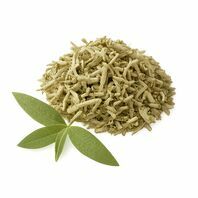
Lemon verbena is a leafy shrub native to South America, brought to Europe by Spanish explorers and now grown widely around the Mediterranean. Its slender leaves have an intense, bright lemon aroma that is sweeter and more floral than lemon peel. Verbena is wonderful on its own, and it pairs well with green tea, white tea, mint, lemongrass and fruit blends. In France it is a classic after-dinner herbal tea called verveine, and it makes a refreshing iced tea too.
A quick look before it’s yours — from the first pour to the last sip.
Play video
Keep your curiosity brewing
more cups to discoverfrom
Plant-based tea bags
Our tea bags are made from PLA (polylactic acid), a bioplastic made from plant starch — most often corn, sometimes cassava, beets or sugarcane. Because it’s made from starch, it’s considered much safer for use with food and drink.
BPA- and phthalate-free — no endocrine disruptors in your cup
Petroleum-free and non-toxic
Compostable and recyclable
How quickly it breaks down depends on conditions like soil, sunlight and temperature.
Make it your kind of cup
ready, set, steep.
A great starting point. Adjust the strength to suit your taste.
011-1.5 TSP or 1 BAGScoop your leavesAdd tea to a roomy infuser or teapot.
0295°C200mlJust add waterPour water over the leaves at the suggested temperature.
034 - 6 minGive it a momentLet the tea steep, then remove the leaves.
04Your perfect cupSip and enjoyTaste it plain first, then make it your own.
01Double the leavesMake it boldUse twice your usual tea amount for a concentrated infusion.
0295°C200mlBrew it hotPour hot water over the leaves.
034 - 6 minSteep, then strainRemove the leaves after brewing.
04Pour over iceCool things downFill a heat-safe glass to the top with ice and pour the hot tea straight over it — the melting ice brings it to the right strength.
A little steeping tipHerbal blends don’t turn bitter — let them steep a little longer for a deeper, fuller flavour.
A fresh way to enjoy itSweeten while the tea is still hot so it dissolves. For a smoother, mellower glass, try cold brew: leaves in cold water in the fridge for 6–8 hours.
Details
Preparation:
Use 1-1.5 TSP or 1 BAG per 200ml of water at 95°C and steep for 4-6 min.
Maybe my favorite tea from Tealyra. This one is fantastic at any time of day: refreshing and light enough for day time, relaxing and soothing enough for evening. Full of unique and interesting flavors that are tied together with a minty note. Smells great, tastes great, feels great!
Christina Ellington
June 2025
This is now my go-to evening tea. Well-balanced flavors. A calming, tranquil tea that always makes me feel better both mentally and physically.
Johanna Matthiesen
February 2025
This tea is absolutely gorgeous... literally the array of herbs look so pretty it makes me smile and get a little giddy every time I open the bag. Is it possible to have a crush on a tea? If so, this is it!