


How to Brew Rooibos Tea: Hot, Iced and Latte
Rooibos is a naturally caffeine-free red tea from South Africa. How to brew it hot, iced or as a latte, how much to use, and which rooibos…
Country, language & currency
By the Tealyra Tea Team · · 3 min read

An evening cup works best when it is caffeine-free and gentle in flavor. Chamomile, lavender, lemon balm, rooibos and valerian are among the herbal teas people most often choose at the end of the day. Here is what each one tastes like, how to brew it, and how to build a simple wind-down ritual around a warm cup.
Chamomile is the classic bedtime tea. The small dried flowers brew a pale golden cup with a soft, honeyed, apple-like flavor. Steep 1 teaspoon of flowers in hot water for 5 minutes. People allergic to ragweed, daisies or related plants should choose another tea.
Lavender is strongly floral and aromatic, so a little goes a long way. It is lovely blended with chamomile or mint, or with a drop of honey. Steep for 4 to 5 minutes; longer can turn it soapy.
Lemon balm is a member of the mint family with a fresh, lemony scent. It brews a light, clean cup and pairs well with chamomile.
Rooibos from South Africa is naturally sweet, nutty and smooth, with no bitterness even after a long steep. It is a good choice if you miss the body of black tea in the evening. Steep 5 to 7 minutes; it takes milk well.
Valerian root has an earthy, woody, slightly pungent flavor that many people prefer in a blend rather than on its own. Steep it for 10 minutes. Do not combine valerian with alcohol or sedative medication.
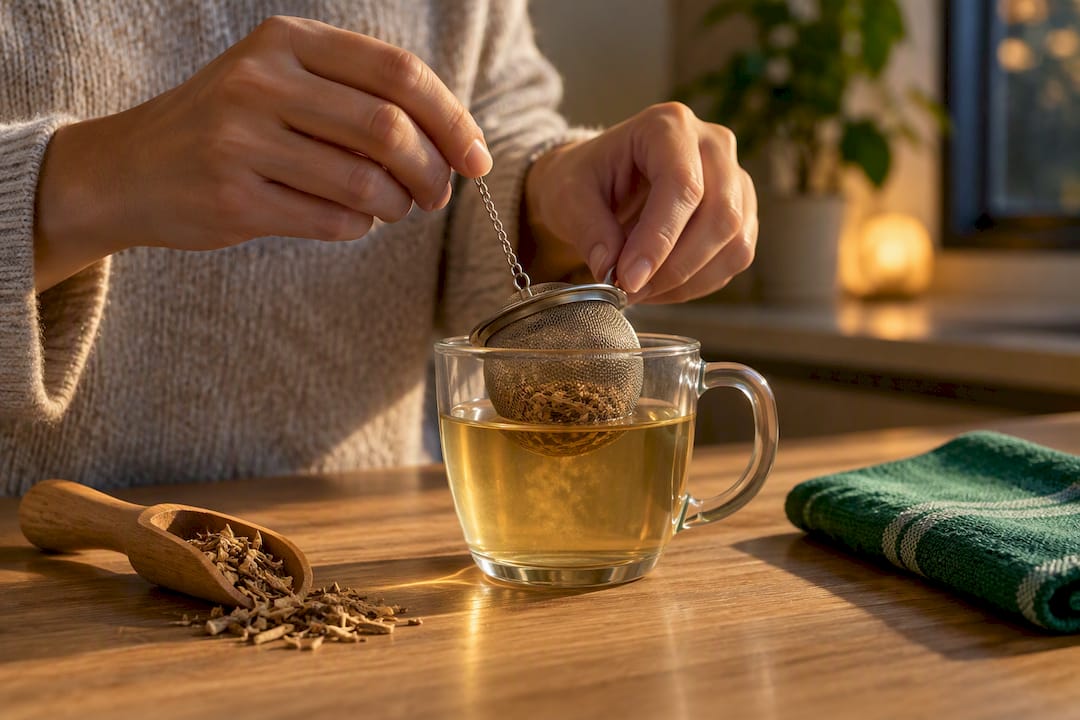
Part of the pleasure of an evening tea is the ritual itself: boiling the kettle, measuring the leaves and taking a few quiet minutes with a warm cup.
Pro Tip: Keep your evening teas together in one tin or shelf so the ritual takes no effort to start.
Black, green, oolong, white tea, matcha and yerba mate all contain caffeine. If you are sensitive to it, enjoy them earlier in the day and switch to herbal teas in the evening. See our guide to caffeine levels in tea for details.
If you are pregnant or breastfeeding, take regular medication, or have ongoing trouble sleeping, talk to your doctor before drinking herbal teas regularly. This article is general information about tea and is not medical advice.
Browse the herbal tea collection to find chamomile, rooibos and calming evening blends.
Herbal teas such as chamomile, lavender, lemon balm, peppermint, rooibos, hibiscus and valerian are naturally caffeine-free. Teas made from the tea plant (black, green, oolong, white) contain caffeine.
About 30 to 60 minutes before bed works well, so you can sip it slowly as part of a wind-down routine.
Rooibos takes milk very well. Chamomile is usually best plain or with honey, and floral teas like lavender are best without milk.
People allergic to ragweed, daisies or related plants should avoid chamomile. If you take regular medication, check with your doctor or pharmacist first.
Rooibos is a naturally caffeine-free red tea from South Africa. How to brew it hot, iced or as a latte, how much to use, and which rooibos…

Detox tea is a marketing name, not a type of tea. What is usually inside these blends, how they taste, what to check on the label and how…

Hibiscus tea is a caffeine-free, ruby-red herbal infusion with a tart, fruity flavor. How it is made, how to brew it hot or iced, and how…