


What Is Sencha? Taste, Grades and Brewing
Sencha explained: how Japan's everyday green tea is made, what it tastes like, the grades and steaming styles to know, and how to brew it…
Country, language & currency
or
By the Tealyra Tea Team · · 6 min read

In short: all jasmine dragon pearls are green tea hand-rolled into small balls and scented with fresh jasmine blossoms. What separates a basic grade from a top one is four things: how tender the pluck was (bud only, or bud plus one or two leaves), how many nights the tea spent with fresh flowers (from about three to ten), how small and tight the pearls are, and how many silver buds you can see. The higher the grade, the softer and sweeter the cup, the more infusions it gives, and the less likely it is to turn bitter.
If you already know what jasmine pearls are and how to brew them, this guide goes one step further and explains why two tins that look alike can taste very different. For the basics, see our post on what jasmine dragon pearls are and how to brew them.
China has no single official grading scale for jasmine pearls the way it does for some black teas. Grades are set by the producer and describe the raw material and the amount of scenting work. Four things decide where a tea lands.
We carry four jasmine pearl teas, from an everyday favorite to a competition-grade tea. Here is how they compare.
| Tea | Pluck | Scenting | Pearl look | Taste | Best for |
|---|---|---|---|---|---|
| Jasmine Dragon Pearls | Bud and two leaves | Several rounds | Medium pearls, green with some silver | Bright jasmine, fresh green body, light sweetness | Daily drinking, iced tea, first jasmine pearls |
| Imperial Jasmine Dragon Pearls | Bud and one leaf | Many rounds | Smaller, tighter pearls, clearly silvery | Rounder and sweeter, floral scent carried deep into the leaf | Gongfu brewing, several infusions |
| Jasmine Phoenix Eye | Bud and one leaf, Fuding | Many rounds | Oval "eye" shape with a white bud center | Soft, honeyed, very low astringency | Anyone who finds pearls a little strong |
| Gold Award Jasmine Linglong Pearl King | Early-spring buds | About ten rounds | Tiny pearls, almost all silver | Thick, creamy, long sweet finish; jasmine as perfume, not flavoring | Special occasions, gifts, tasting side by side |
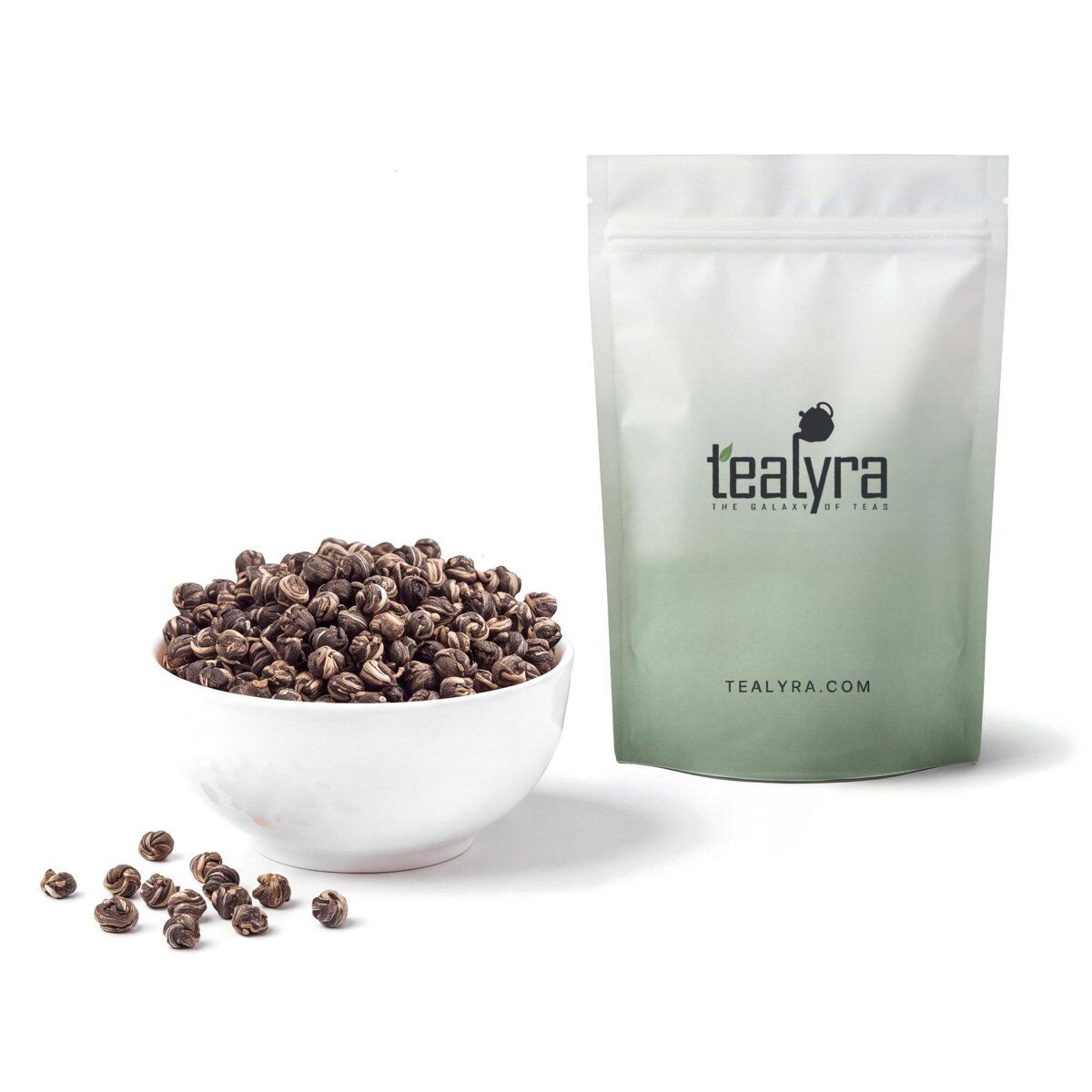
Brew the entry grade and the top grade the same way and the contrast is clear in three places.
Aroma. A lower grade smells strongly of jasmine when dry, then fades noticeably by the second infusion. A high grade smells more restrained in the tin but keeps its floral note through four, five or six steeps, because the scent was absorbed over many nights rather than added at the end.
Texture. Buds carry more natural sugars and amino acids than mature leaves. That is why Imperial and Linglong Pearl King feel thicker and almost creamy, while the standard grade is lighter and more refreshing.
Forgiveness. Mature leaves give up tannins fast. Oversteep an everyday grade by a minute and it turns sharp. A bud-heavy grade stays smooth even when you forget the timer, which makes it the better choice for a gaiwan with short, repeated infusions.
You can read a lot from the dry pearls alone.
Use 1 teaspoon (3 g) of pearls for 250 ml / 8 oz of water, and adjust the temperature and time to the grade.
Whatever the grade, never use boiling water. It scorches the young leaves and strips the floral note in seconds. If you want to explore scented teas further, the jasmine tea collection also has jasmine white and oolong, and the Chinese green tea page shows the unscented teas that pearls are made from.
Start with the standard Jasmine Dragon Pearls if you drink jasmine tea with meals, make iced tea, or are trying pearls for the first time. Move up to Imperial or Phoenix Eye when you brew in a gaiwan and want a tea that rewards a third and fourth infusion. Save the Gold Award Linglong Pearl King for a quiet tasting or a gift for someone who already loves jasmine tea; brewed carelessly it is wasted, brewed gently it shows what ten nights of scenting can do.
A practical tip: buy a small amount of two grades and brew them side by side with the same water and timer. The difference is easier to taste than to describe. Browse the full range on our green tea page.
Not for every use. A top grade is softer and more complex, but its subtlety is lost in iced tea or a milky latte. For those, an everyday grade tastes brighter and costs less per pitcher.
Everyday grades are usually scented three to five times. Premium grades go to seven, and the finest pearls spend nine or ten nights with fresh flowers, with the spent blossoms removed each morning.
Almost always the water was too hot or the steep too long. Drop to 175°F / 80°C and 2 minutes. If it is still bitter, the pearls are made from older leaves, which release tannin faster.
Yes. They are green tea, so a cup holds roughly 25 to 40 mg of caffeine, a little more in bud-heavy grades. Later infusions have progressively less.
In an airtight tin away from light, heat and other aromas. The scent fades over time, so buy amounts you will finish within about six months.
Sencha explained: how Japan's everyday green tea is made, what it tastes like, the grades and steaming styles to know, and how to brew it…

Which tea to drink after 6pm: decaf green and black, rooibos and herbal infusions compared for taste and caffeine, with brewing times and…

Dragon Well (Long Jing) tea explained: where it grows, why the leaves are flat, how it tastes, how to pick a grade and how to brew it in a…