


How to Drink Oolong Tea: Caffeine, Cups a Day and Brewing
How to drink oolong tea: how much caffeine is in a cup, how many cups a day are reasonable, when to drink it, and brewing tips for rolled…
Country, language & currency
or
The Tea Journal · Brewing Guides · Oolong Tea
By the Tealyra Tea Team · · 5 min read

In short: loose leaf milk oolong wins on flavour and on value. The whole rolled leaves open over four to six steeps and give that soft, buttery, orchid-like cup the tea is famous for. Tea bags are quicker, but most are filled with broken leaf and flavouring, give one flat steep, and work out dearer per cup once you count the re-steeps you are missing. If you want convenience, choose pyramid bags with whole rolled leaf and brew them twice.
Milk oolong is one of the most searched oolongs in the UK, and one of the most confusing to buy. Here is what the name really means, how loose leaf and bags compare side by side, and how to brew each one so it tastes its best.
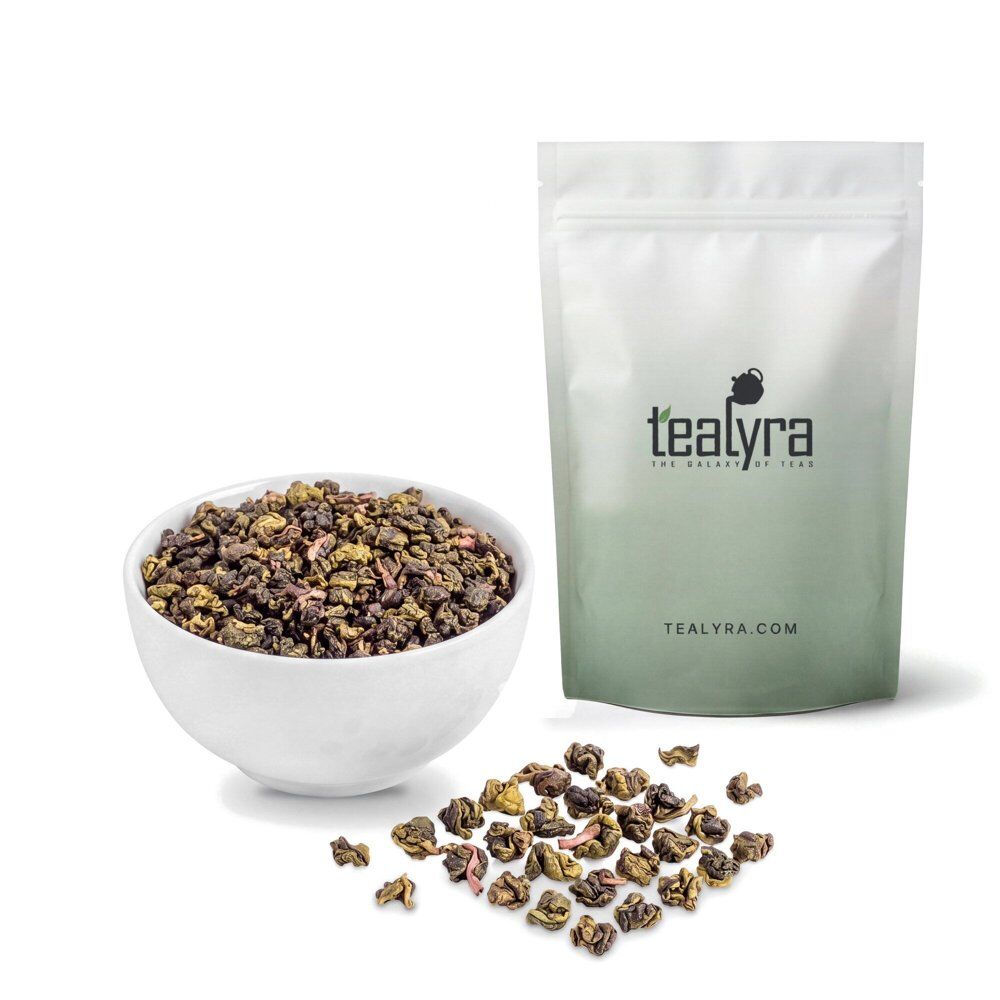
True milk oolong is made from the Jin Xuan cultivar, a tea bush developed in Taiwan in the 1980s. Grown at altitude and lightly oxidised, Jin Xuan leaves naturally carry a creamy, sweet-corn and orchid note. No milk is added at any stage: the dairy-like softness is in the leaf itself and comes from the cultivar, the mountain climate and the light roasting. Our Milk Jin Xuan Supreme is this style: tightly rolled jade-green pellets that unfurl into whole leaves with the stem still attached.
A second style is "milk-flavoured" oolong, usually a Chinese oolong scented with a milk or cream flavouring. It tastes more obviously milky in the first cup and fades fast. Both are sold under the same name, which is why two milk oolongs can taste nothing alike. On our oolong tea page we label the origin so you know which one you are getting.
| What you compare | Loose leaf milk oolong | Milk oolong tea bags |
|---|---|---|
| Leaf | Whole rolled leaves, often with stem | Broken leaf or fannings in paper bags; whole leaf only in pyramid bags |
| Taste | Creamy, floral, sweet; changes with every steep | One-note; flavoured bags taste milky then flat |
| Steeps per serving | 4 to 6 in a small pot, 2 to 3 in a mug | 1, sometimes 2 with a pyramid bag |
| Brew time | 2 to 3 minutes for a mug, 30 to 60 seconds gongfu style | 2 to 3 minutes |
| Kit needed | Infuser mug, pot or gaiwan | A mug |
| Cost per cup | Lower, because each 3 g serving brews several cups | Higher per cup of good tea; cheaper only for a single quick brew |
| Freshness | Rolled pellets keep well for 12 months or more in a sealed pouch | Small leaf loses aroma faster once the box is opened |
Milk oolong is a rolled tea. Each pellet is a whole leaf or a cluster of two or three leaves folded tightly. When hot water hits them, they take a minute or two to open, and the flavour comes out slowly in layers: buttery first, then floral, then a honeyed, slightly green finish. A standard tea bag cannot do this. The leaf inside is cut small so it brews fast, which pulls everything out in one go, and the paper bag gives the pellets no room to unfurl.
Pyramid bags are the honest middle ground. A good one holds 2 to 3 g of real rolled leaf in a roomy mesh, so the leaves can open and you get a respectable second steep. If you choose bags, look for the words "whole leaf" and check that the ingredients list says only oolong tea. If it lists "flavouring", you are buying a scented tea, not a Jin Xuan.
You do not need a tea ceremony. A mug with an infuser basket works well.
For a small pot or gaiwan (100 to 150 ml), use 5 to 6 g and steep for 30 to 45 seconds, adding 15 seconds per round. You will easily get six cups. Hard water, which much of England has, flattens oolong; a filter jug makes a clear difference.
If a bag is what you have, treat it like loose leaf. Use water at 85 to 90°C, not boiling. Give it 3 minutes, then lift the bag and keep it on a saucer for a second brew of 4 minutes. Do not squeeze it; squeezing pushes out the bitter compounds that stay in the leaf. Pyramid bags re-steep well; paper bags rarely do.
All three are whole rolled leaf and will re-steep. Store them in the sealed pouch away from light and the kettle's steam, and they keep their aroma for a year or more.
No. Real milk oolong is pure tea from the Jin Xuan cultivar. The creamy taste is natural. Only "milk-flavoured" oolongs have anything added, and that is a flavouring, not dairy. Both are suitable for a dairy-free diet, but check the ingredients if you are buying bags.
Four to six times in a small pot or gaiwan, two to three times in a mug. Add about 30 seconds to each steep. Stop when the cup turns pale and watery.
Almost always the water is too hot or the steep too long. Drop to 85°C and taste at 2 minutes. Over-filling the infuser so the pellets cannot open also makes the cup uneven.
It is moderate: a 250 ml cup brewed for 3 minutes has roughly 30 to 45 mg of caffeine, less than a mug of black tea and about a third of a cup of filter coffee. Later steeps have less.
You can, but it covers up what makes the tea special. If you like a creamy drink, brew it strong, let it cool and pour it over ice instead; the natural buttery note comes through even better cold.
How to drink oolong tea: how much caffeine is in a cup, how many cups a day are reasonable, when to drink it, and brewing tips for rolled…

What makes Taiwan high mountain oolong special, how to choose Ali Shan or Mei Shan, and how to brew it gongfu style or in a mug, with times…

Discover Da Hong Pao, China's legendary rock oolong tea. Learn about its rich history, unique roast profiles, and how to brew the perfect…