


How to Make a Proper Builder's Tea with Loose Leaf
How to make a proper builder's tea with loose leaf: which black tea to use, how much, how long to brew, when to add milk and sugar, and how…
Country, language & currency
The Tea Journal · Black Tea · Brewing Guides
By the Tealyra Tea Team · · 5 min read

In short: orange pekoe (OP) is not a flavor and has nothing to do with oranges. It is a grade for whole black tea leaves, used mostly for teas from India and Sri Lanka. Letters added in front, like FOP or TGFOP, mean more buds and golden tips; a "B" means the leaves are broken. The grade tells you about the leaf, and the leaf tells you how to brew it.
If you grew up with a box of "orange pekoe" in the cupboard, you probably thought it was a type of tea. It is really a label for leaf size and shape. Once you know how the grades work, a tea label full of letters starts to make sense, and you can choose a cup that fits your taste.
"Pekoe" most likely comes from the Chinese bai hao, meaning "white down", the fine hairs on young tea buds. Early European traders used it for teas with plenty of these downy tips.
"Orange" is less clear. The most common story links it to the Dutch House of Orange-Nassau, since Dutch merchants brought early tea to Europe and "orange" sounded royal. Another theory points to the copper-orange color of well-oxidized leaves. Either way, the word stuck and became part of the grading system tea estates still use today.
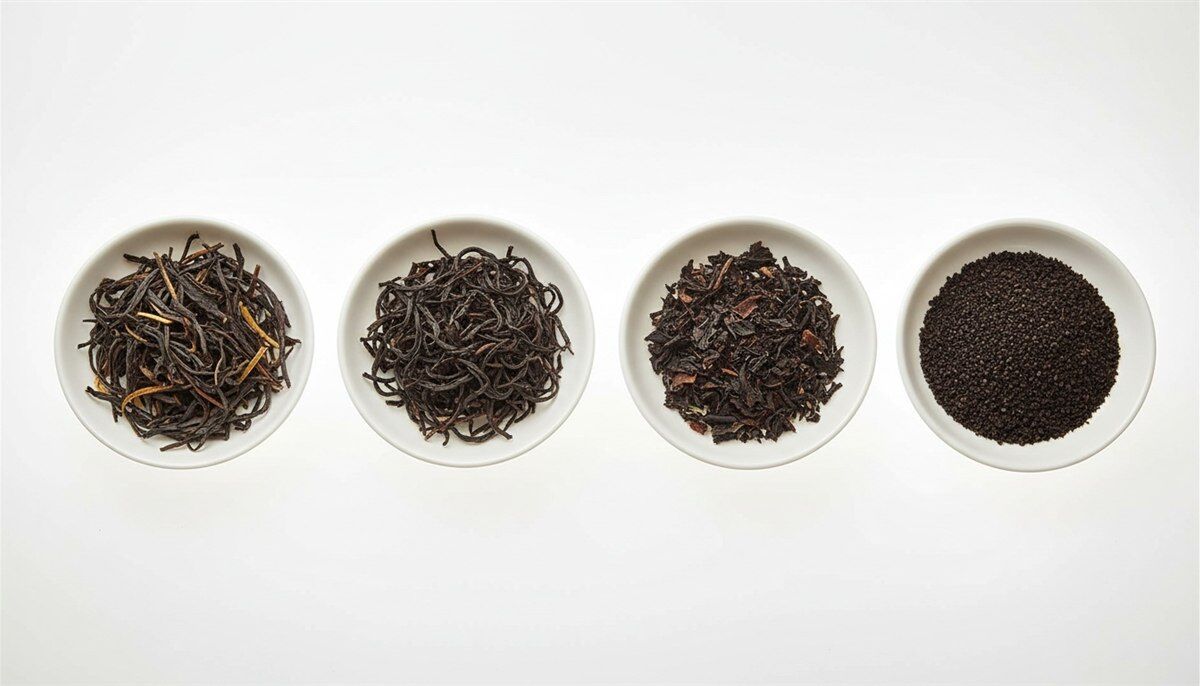
Grades describe whole leaves, broken leaves, and the small pieces left after sorting. Here is how the main ones line up:
| Grade | Stands for | What you get |
|---|---|---|
| SFTGFOP | Special Finest Tippy Golden Flowery Orange Pekoe | Whole leaf with lots of golden tips; top grade for fine Darjeeling and Assam |
| FTGFOP | Finest Tippy Golden Flowery Orange Pekoe | Whole leaf, many tips, careful sorting |
| TGFOP | Tippy Golden Flowery Orange Pekoe | Whole leaf with a good share of golden tips |
| GFOP | Golden Flowery Orange Pekoe | Whole leaf with some golden tips |
| FOP | Flowery Orange Pekoe | Whole leaf plus some buds |
| OP | Orange Pekoe | Long, wiry whole leaves, few or no tips |
| Pekoe | Pekoe | Shorter, coarser whole leaves |
| BOP | Broken Orange Pekoe | Broken pieces of whole leaf |
| Fannings | Fannings | Small pieces, often used in tea bags |
| Dust | Dust | The finest particles; very fast, strong brew |
A simple way to read a label: the more letters before "OP", the more buds and tips. An extra "B" means the leaf is broken, which brews faster and stronger.
CTC stands for "crush, tear, curl". Instead of rolling whole leaves, machines cut them into tiny hard pellets. CTC tea brews dark and malty in a minute or two, which is why it is popular for masala chai and strong breakfast cups.
Yes, but not the way people often expect. Grade is about leaf size, not quality.
Where a tea comes from matters as much as its grade. An Assam TGFOP tastes malty and bold; a Darjeeling FTGFOP is lighter, floral and bright. A Ceylon OP is crisp with a citrusy edge, which may be one more reason the "orange" name feels right.
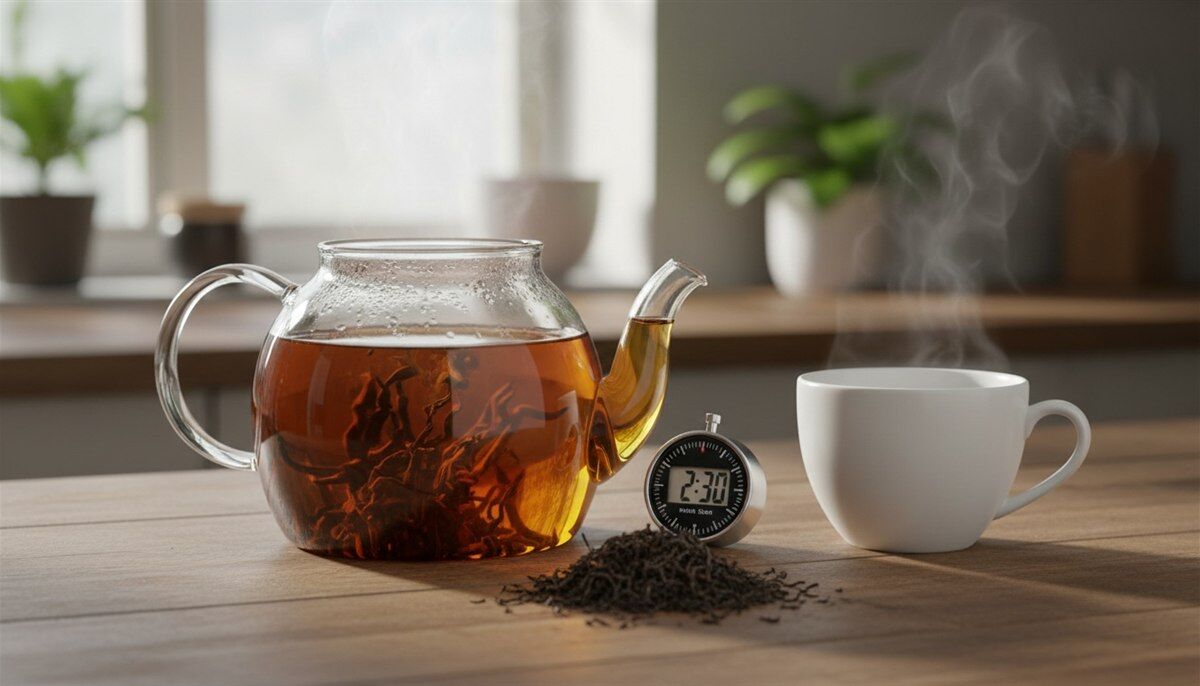
Black tea likes hot water. Use these numbers as a starting point and adjust to taste.
| Leaf type | Tea per 8 oz (240 ml) | Water | Time |
|---|---|---|---|
| Whole leaf (OP, FOP, TGFOP) | 1 heaping tsp (2.5–3 g) | 205°F / 96°C | 3–5 min |
| Darjeeling first or second flush | 1 heaping tsp (2.5 g) | 195°F / 90°C | 3–4 min |
| Broken leaf (BOP) | 1 level tsp (2–2.5 g) | 205°F / 96°C | 2–4 min |
| CTC | 1 level tsp (2 g) | 212°F / 100°C | 1–3 min |
Step by step:
Whole leaves can often be steeped a second time. Add a minute and expect a lighter, sweeter cup. For more ratios, see our guide on how much loose leaf tea to use per cup.
Browse our full range of black tea, or start with a classic Earl Grey, which is usually made on a whole or broken black tea base. If you love spiced cups, our chai teas show how well broken leaf works with milk.
No. Orange pekoe has nothing to do with oranges. It is a grade that describes whole black tea leaves of a certain size and shape.
Yes. Orange pekoe is black tea, so a cup usually has about 40 to 70 mg of caffeine, depending on how much leaf you use and how long it steeps.
Orange pekoe (OP) is a whole, long leaf. Pekoe on its own usually means shorter, coarser whole leaves that sit a step below OP on the grading ladder.
Finest Tippy Golden Flowery Orange Pekoe. It means whole leaves with plenty of golden tips (buds), the kind of grade you often see on fine Darjeeling and Assam teas.
Not always. The grade describes leaf size and how many tips there are, not taste. A well-made broken grade can make a richer cup than a poorly made whole leaf.
How to make a proper builder's tea with loose leaf: which black tea to use, how much, how long to brew, when to add milk and sugar, and how…

Turkish tea is strong black tea brewed in a two-tier çaydanlık and served in tulip glasses. How to brew it at home, how strong to make it…

A London Fog is an Earl Grey latte with steamed milk and vanilla. An easy recipe, how to froth milk without a machine, dairy-free options…